Most hospitals run two PACS systems yet still lose imaging studies between departments because legacy servers cannot talk to each other. Your IT team spends hours each month on VPN tunnels and physical media, while radiologists wait for CDs instead of opening cases in their browser. The decision between Fujifilm and Medicai now hinges on whether you keep paying for hardware refreshes or move to a cloud platform that already connects multiple sites without extra infrastructure.
By the end of this article you will see the exact storage, viewer, and compliance differences that matter for a multi-location network. You will also know which pricing model fits your case volume and which vendor can add AI tools without new hardware purchases.
Quick Verdict: Fujifilm vs Medicai for Enterprise Imaging Solutions
Medicai delivers cloud-native enterprise imaging with a zero-footprint DICOM viewer, while Fujifilm provides a mature on-premise and hybrid PACS suite.
Healthcare organizations face clear platform differences when selecting enterprise imaging solutions. Medicai processes over 1M studies yearly and handles 50M API transactions annually. Fujifilm brings decades of established radiology presence and broad deployment flexibility.
The platforms differ significantly in approach and capabilities. Medicai operates as a HIPAA and GDPR compliant platform with FDA cleared viewers. Fujifilm supports both cloud and on-premise deployments across various healthcare settings.
Scalability marks another distinction between these solutions. Medicai manages 1.7M studies in storage and recorded 300k visualizations in the past year. Fujifilm maintains traditional deployment models that require infrastructure planning and management.
Security standards separate modern platforms from legacy systems. Medicai follows OWASP security guidelines across its architecture. Fujifilm maintains established security protocols suited to its hybrid deployment options.
At a glance: how Medicai compares to Fujifilm, Medicai for Enterprise Imaging Solutions on the features that matter most.
| Feature | Medicai | Fujifilm | Medicai for Enterprise Imaging Solutions |
|---|---|---|---|
| Enterprise Imaging Solutions | ✓ | ✗ | ✓ |
What Is Medicai?
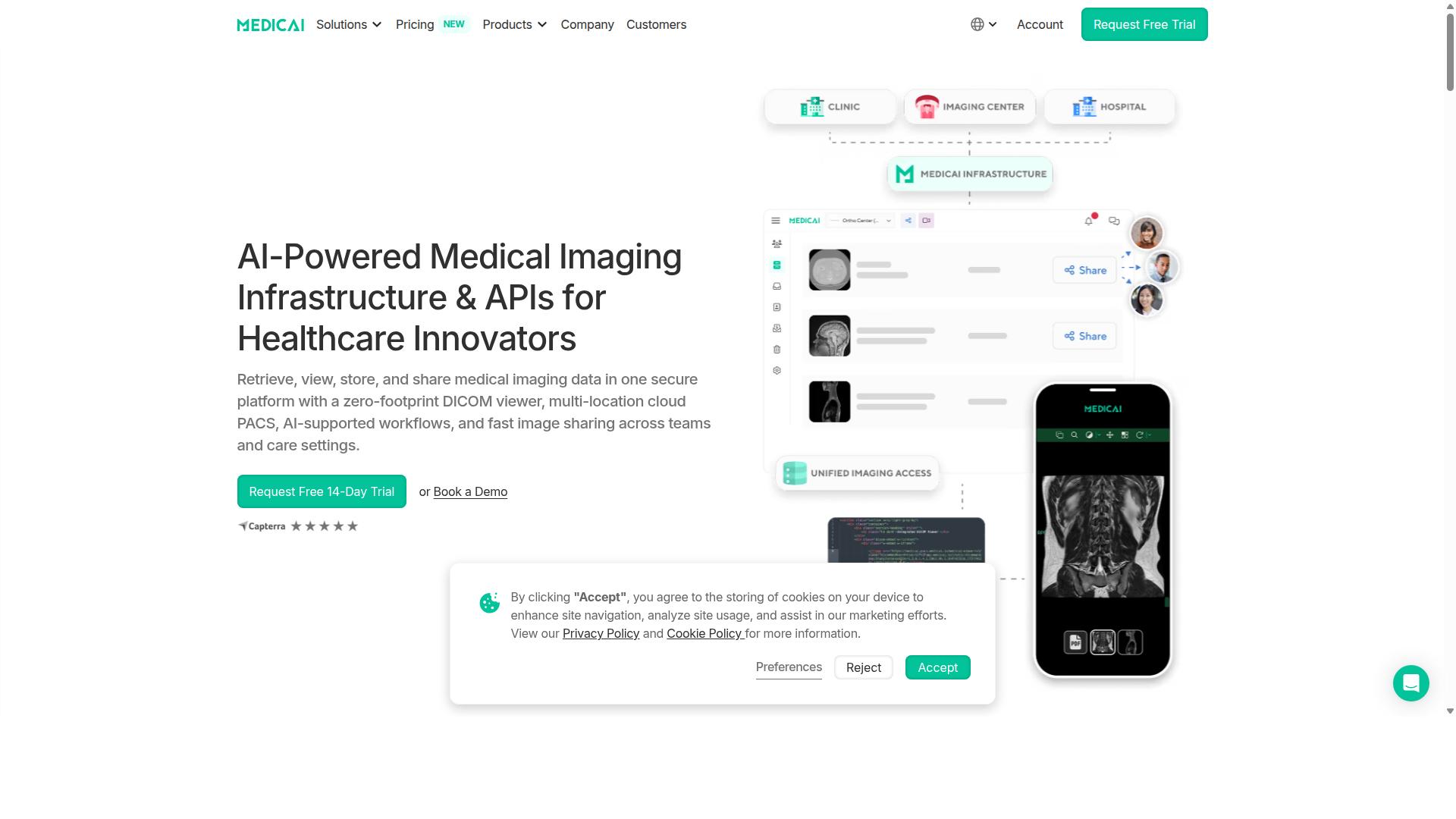
Medicai is a cloud-based medical imaging platform that enables healthcare providers to retrieve, view, store, and share imaging data in one secure environment.
The platform includes a zero-footprint DICOM viewer that runs in any browser without local installation. This component supports enterprise imaging workflows where radiologists need immediate access to studies from multiple locations.
Medicai also offers a multi-location cloud PACS that consolidates imaging data from different sites. The system serves as a vendor-neutral archive that stores DICOM studies from various modalities and manufacturers in a single repository.
Secure image exchange allows care teams to share studies with external providers while maintaining compliance standards. This capability supports interoperability requirements in modern healthcare settings where multiple systems must communicate effectively.
Recent activity shows 300k+ visualizations recorded in the last year across the platform. The system currently manages 1.7M+ studies in storage, demonstrating the scale of data handling capacity for enterprise customers.
Medicai provides Imaging Infrastructure as a Service that replaces traditional on-premise servers with cloud deployment. This approach reduces hardware maintenance while supporting the scalability needed for growing imaging departments.
What Is Fujifilm?
Fujifilm offers a comprehensive enterprise imaging suite that combines PACS, RIS, and workflow management for radiology departments. The company has built its reputation on delivering on-premise and hybrid imaging solutions that address the needs of healthcare organizations.
Many facilities rely on traditional infrastructure when choosing imaging platforms. Fujifilm provides established systems that support radiology workflows through on-premise deployment and hybrid configurations.
Healthcare organizations evaluating enterprise imaging solutions often consider multiple factors. These include image management capabilities, interoperability standards, and deployment flexibility.
Traditional vendors have developed their platforms over many years. Fujifilm represents one option among established providers in this market space.
Decision makers comparing Fujifilm with newer approaches must evaluate their specific requirements. Factors like scalability, data migration, and interoperability matter when selecting an enterprise imaging partner.
What Is Medicai for Enterprise Imaging Solutions?
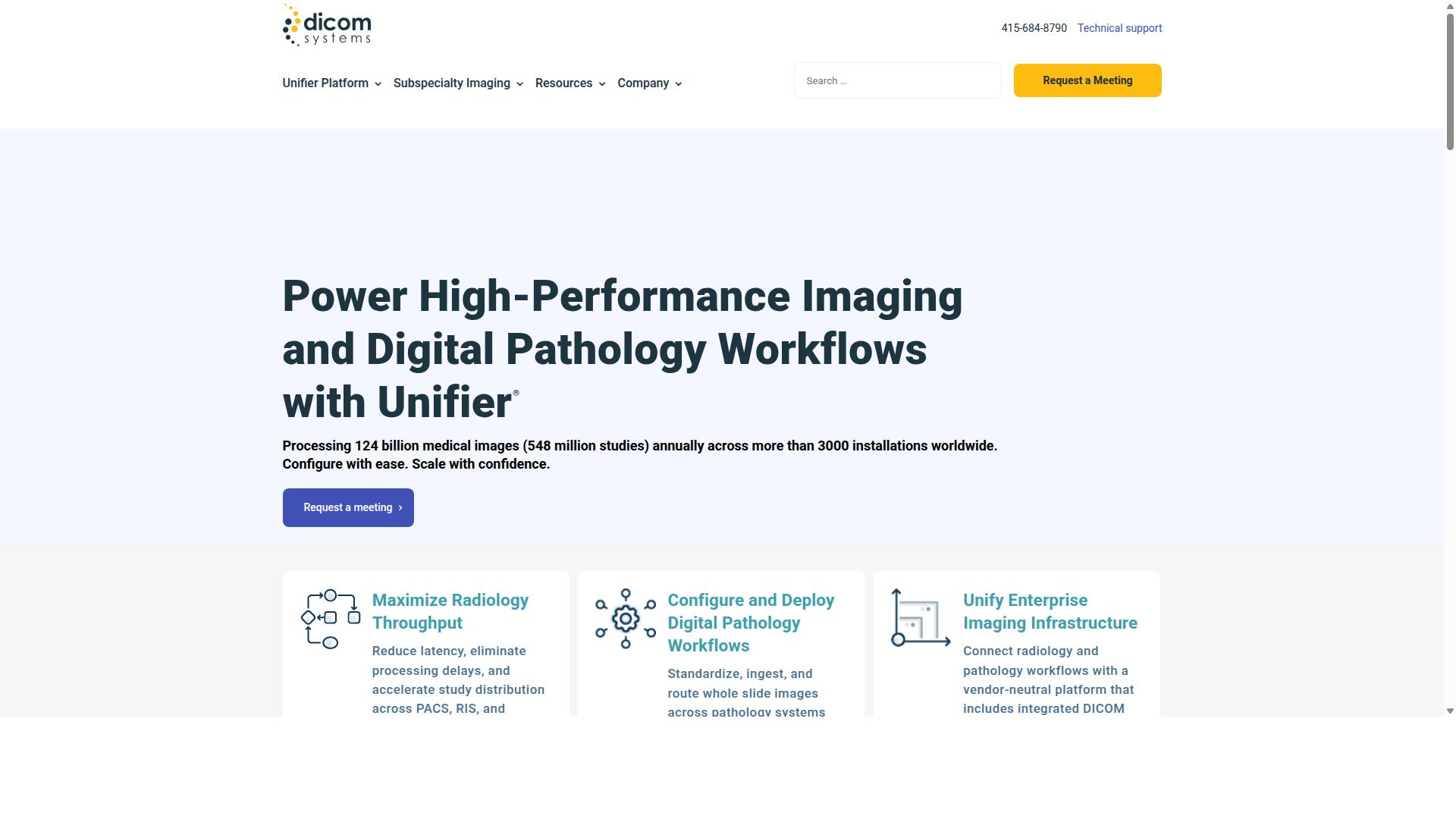
Within enterprise imaging, Medicai functions as a vendor-neutral, cloud-first archive that connects radiology, cardiology, and specialty workflows through HL7 and FHIR interfaces.
Multi-modality support allows institutions to consolidate CT, MRI, ultrasound, and X-ray studies into a single system.
Integration with existing EMR and RIS systems occurs via standard HL7 and FHIR interfaces. These connections maintain current patient records and imaging orders without requiring additional middleware.
Medicai processes over 50M API transactions yearly. This volume demonstrates reliable interoperability at scale across diverse healthcare environments.
Core components include the Cloud PACS and Vendor Neutral Archive for storage. Medical Imaging Uploader and DICOM Gateway handle data ingestion from various modalities.
Collaboration features encompass the Doctor Imaging Portal, Patient Imaging Portal, and Structured Reporting for Radiology. Mobile Imaging App extends access to tablets and smartphones.
Additional capabilities include Radiology AI Co-Pilot and AI-Powered Diagnostics. Teleradiology support enables remote reading and consultation across locations.
Compared to traditional Fujifilm deployments, Medicai offers cloud-native architecture without dedicated hardware investments. Fujifilm systems often require on-premise servers and maintenance contracts that vary by installation size.
Features Compared
The three feature clusters below isolate the technical and workflow differences between the two solutions.
Enterprise imaging teams evaluate storage tiers, viewer performance, and compliance frameworks before selecting a platform. Each category reveals distinct approaches to cloud versus on-premise deployment and to collaborative access.
Comparing concrete pricing tiers against general scalability options helps decision makers match infrastructure needs with available budgets and regulatory requirements.
Cloud Storage & Multi-Location Access
Medicai Starter tier begins at $249/month with 500 GB of cloud storage and unlimited user accounts across any number of sites.
Standard tier expands to 2 TB storage and one connected location for $749/month. Enterprise customers can request custom storage volumes and multiple external connections through the same platform.
Fujifilm solutions generally scale through on-premise storage arrays, which may require additional hardware investments when expanding capacity. These deployments can create latency challenges for teams spread across geographic regions.
Both approaches address enterprise imaging needs, yet cloud-native delivery provides faster deployment cycles for multi-location networks.
Zero-Footprint Viewer & Collaboration Tools
Medicai's zero-footprint viewer supports real-time image sharing and multi-specialty case reviews without installing client software.
The platform recorded 300k+ visualizations of DICOM studies in the last year, indicating broad clinical adoption across specialties. Orthopedics, oncology, and cardiology teams use the same interface for case conferences and second opinions.
Microsoft Azure infrastructure underpins the viewer, enabling consistent performance across standard web browsers. No local processing requirements reduce IT overhead and speed onboarding for new users.
Fujifilm viewers typically require dedicated workstation installations or plugins that can limit participation from remote specialists. This difference affects how quickly multidisciplinary teams can review studies together.
Zero-footprint access combined with proven visualization volume positions the platform for organizations seeking streamlined collaboration without hardware constraints.
Security Compliance & AI-Enabled Workflows
Both platforms assert HIPAA compliance. Medicai adds GDPR certification and FDA clearance for its viewer.
Role-based access controls and audit trails track every study interaction within the system. These features satisfy enterprise governance requirements while maintaining clinical workflow speed.
Medicai partners with AI vendors including MD.ai and Rayscape.ai to enable automated measurements and triage within existing PACS environments. These integrations reduce repetitive tasks for radiologists and support structured reporting workflows.
Fujifilm maintains general security postures typical of established vendors, yet specific AI partnership details remain less documented in public materials. Organizations seeking immediate AI capabilities may find clearer pathways through documented vendor integrations.
Combined compliance certifications and named AI partnerships provide a practical route for facilities pursuing both regulatory alignment and workflow automation in one deployment.
Pricing Compared
Medicai publishes transparent monthly fees while Fujifilm pricing is typically custom-quoted. This difference affects how healthcare organizations plan their budgets for enterprise imaging solutions. Transparent pricing allows radiology departments to forecast expenses without lengthy sales negotiations.
Medicai Starter tier costs $249 per month and provides 500 GB of cloud storage with unlimited user accounts. This entry-level plan suits smaller practices exploring cloud-based PACS solutions. The plan includes a free 14-day trial of Starter plan features with no credit card required.
Medicai Standard tier costs $749 per month and offers 2 TB of cloud storage plus one connected location. This tier accommodates growing imaging departments that need additional storage capacity. Yearly billing provides 15 percent savings, reducing the Standard tier cost to $639 per month when paid annually.
Enterprise customers can access custom pricing through Medicai that includes multiple connected locations and external access points. Per-study pricing options are also available for organizations with variable imaging volumes. DICOM Gateway setup requires a one-time fee of $1,000 per location for network integration.
Fujifilm pricing models vary and require direct negotiation with their sales teams. This approach often involves extensive consultation periods and customized proposals based on specific organizational needs. Healthcare systems exploring Fujifilm solutions must budget additional time for procurement processes compared to transparent pricing alternatives.
Who Should Choose Medicai
Hospitals and specialty clinics that need rapid deployment, global access, and predictable monthly costs favor Medicai.
Imaging centers gain from unlimited user accounts that let referring physicians, technologists, and radiologists connect without seat-based restrictions.
Zero-footprint access supports reading studies from multiple clinic locations, home workstations, or partner hospitals on any device.
Orthopedic groups benefit when surgeons review images during rounds, in the operating room, or at satellite offices without VPN connections or software installs.
Neurology departments rely on the same access model for urgent stroke protocols and multi-site tumor boards that involve external consultants.
Oncology practices use the platform to share serial studies with medical and radiation oncologists across different health systems.
Specialty care providers in cardiology, ophthalmology, and pulmonology also fit this profile because they handle frequent image review outside the main hospital network.
Virtual care providers and teleradiology services value the lack of infrastructure investment and the ability to scale users quickly across states or countries.
Personal injury lawyers and medical education organizations access studies for case review and teaching files without additional viewer licenses.
Patient portals allow direct sharing with individuals who need their own imaging records, reducing staff time spent on disc burning or portal uploads.
Compared with traditional enterprise imaging platforms, Medicai removes per-user fees and on-premise server maintenance that can limit growth for mid-sized groups.
Clinical trials and tumor boards find the browser-based model helpful when participants join from different institutions with varying IT policies.
Who Should Choose Fujifilm
Large health systems with existing on-premise infrastructure and strict data-residency policies often stay with Fujifilm.
These organizations typically run legacy RIS or PACS stacks that already handle HL7 messaging and DICOM routing.
Keeping the same vendor reduces the need for extensive data migration projects or workflow retraining across departments.
IT teams that prefer full control over hardware and network configurations may favor this approach. They can maintain isolated environments that meet internal security standards without relying on external hosting models.
Facilities that process high volumes of imaging studies across multiple specialties often value predictable on-premise performance.
In such settings, interoperability with existing EMR systems and custom reporting tools takes priority over newer cloud-based features.
Organizations that must comply with regional data-location rules may also choose this path. On-premise deployment keeps all imaging data within local boundaries and under direct internal oversight.
Some radiology departments continue using Fujifilm when specialized modality connections or older scanner interfaces already function reliably within their current stack.
In these cases, switching vendors could introduce unnecessary complexity during a period of otherwise stable operations.
Who Should Choose Medicai for Enterprise Imaging Solutions
Providers migrating from legacy PACS or expanding across multiple sites find Medicai's cloud architecture the fastest path to enterprise imaging.
Health systems moving away from older archives face complex data transfers that often require weeks of planning. Medicai addresses this challenge directly through built-in data migration support and flexible connectivity tools.
The platform handles HL7 and FHIR protocols, enabling smooth integration with existing EMR systems and radiology workflows. Hospitals can exchange patient information across departments without disrupting daily operations or creating new IT bottlenecks.
Adding locations becomes straightforward because Medicai operates as a cloud service. Organizations can connect new facilities without purchasing additional hardware or managing separate servers at each site.
CONNECT & RETRIEVE components streamline the process further. The Medical Imaging Uploader and DICOM Gateway enable quick ingestion of studies from various modalities across the enterprise.
Central storage happens through the Vendor Neutral Archive, which consolidates images from multiple sources into a single, accessible repository. This approach eliminates the need for duplicate systems at each location.
Teams benefit from native support for structured reporting for radiology and the Doctor Imaging Portal. These tools keep interpretation workflows consistent regardless of where radiologists access the system.
Security remains intact during expansion because the cloud model maintains audit trails and role-based access controls across all connected locations. New sites inherit existing protocols automatically.
The combination of HL7/FHIR connectivity, hardware-free scaling, and migration assistance makes Medicai suitable for organizations that prioritize interoperability and rapid deployment over traditional infrastructure investments.
Final Verdict
For cloud-first, globally accessible enterprise imaging that is HIPAA, GDPR, and FDA cleared, Medicai provides the clearer upgrade path. Fujifilm remains a capable choice in traditional hospital environments, yet many organizations are shifting toward solutions that combine scalability with modern compliance standards.
Proof points matter when selecting enterprise imaging platforms. Medicai processes over 1 million studies each year and stores more than 1.7 million studies, demonstrating proven capacity for high-volume radiology workflows. The platform also handles 50 million API calls annually, confirming robust interoperability with existing EMR and RIS systems.
Deployment flexibility separates the two solutions. Fujifilm often requires significant on-premise infrastructure, while Medicai supports cloud deployment that reduces hardware costs and maintenance overhead. Data migration becomes simpler when the target system already manages millions of studies and billions of API interactions across multiple healthcare sites.
Organizations seeking long-term scalability should evaluate total cost of ownership alongside technical capabilities. Medicai addresses both concerns by combining verified performance metrics with global infrastructure that eliminates geographic restrictions common in legacy PACS deployments.
Contact Medicai USA at 7901 4th St N, STE 300, St. Petersburg, FL 33702, phone +1 (832) 220-1035 or Medicai Romania at 53-55 N Filipescu, 5th Floor, Sector 2, Bucharest 020961, phone +40 316 305 875, email [email protected] to discuss implementation timelines and integration requirements for your specific radiology workflow.
Recommended Resources: